The 15-yard dumpster is the middle step between the 10-yard ($795) and the 20-yard ($895), and it fits the jobs that fall in that gap. The container measures roughly 16 feet long, 7 feet wide, and about 4 feet tall,…
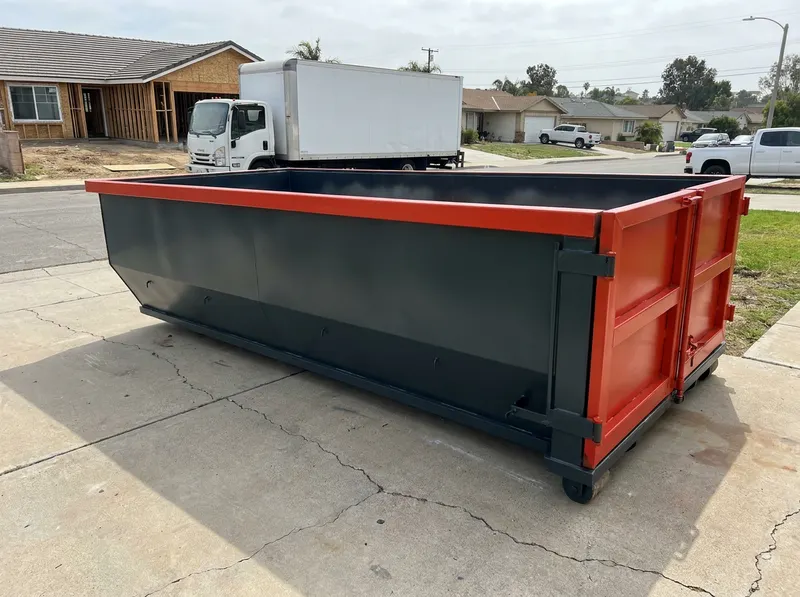
The 15-yard dumpster is the middle step between the 10-yard ($795) and the 20-yard ($895), and it fits the jobs that fall in that gap. The container measures roughly 16 feet long, 7 feet wide, and about 4 feet tall, holds about 15 cubic yards, and takes the equivalent of 6 standard pickup loads. A single-room kitchen remodel in North Park, a bathroom gut in Hillcrest, or a two-car-garage cleanout in Clairemont typically fits inside one 15-yard load.
Its lower height makes it easier to toss heavy debris over the wall than a 20-yard, which matters on demolition work that produces dense material like tile and plaster.
Decision-fit is about volume versus driveway space. A 15-yard bin footprint needs roughly 18 feet of clear driveway length plus room for the truck to set it down. If a single-room cleanout produces mostly furniture and boxes, a 10-yard holds it; if a roof tear-off or whole-floor remodel is in play, step up to the 20-yard or 30-yard so the project does not stall waiting on a swap.
For dense material such as broken concrete, brick, or roofing shingles, a 15-yard is often the right choice even when the pile looks small, because weight fills the bin before the walls do, the EPA's guidance on construction and demolition materials notes that C&D debris is sorted by weight and type at the facility.
Loading rules keep the flat price honest. Household hazardous waste stays out, the CalRecycle household hazardous waste program and the San Diego County hazardous materials guidance both direct paint, solvents, batteries, and electronics to designated drop-off sites, not a rental bin. Tires, wet concrete slurry, and refrigerant appliances also require separate handling.
Keeping those items out is why the $850 holds flat with no surprise overage line. For job-site loading, the OSHA construction standards cover safe debris handling, and the NIOSH construction resources outline lifting and dust precautions. Diversion-minded crews can check Earth911 for where salvageable fixtures and metals go instead of the landfill, and the CalRecycle construction and demolition recycling page lists how California handles sorted loads.
Placement and permits turn on where the bin sits.
On a private driveway in Carmel Valley, Scripps Ranch, or Rancho Bernardo, no permit is needed. If the only spot is the public street or a sidewalk, the City of San Diego requires an encroachment or right-of-way permit, the City of San Diego permits page covers the process, and projects near coastal zones like Point Loma or Pacific Beach may touch California Coastal Commission rules. A plywood sheet under the bin protects pavers and stamped concrete; the ADA requirements require a clear pedestrian path when a bin is set near a public walkway.
Here is how the rental runs: Step 1, call or text a photo to confirm the 15-yard fits the debris. Step 2, pick a drop-off day and a clear placement spot. Step 3, load up to the fill line marked inside the bin.
Step 4, call for pickup. Step 5, the load is hauled to a permitted San Diego County facility and the flat $850 is final.
Every job gets a firm, written price after an on-site visit.
Tell us about your 15-yard dumpster job in San Diego and we'll send a clear, written quote, usually the same day.
 Rollout Dumpster Rental